Emotional manipulation is an instrument of politics with long-term effects. Political figures use it to determine people to stay idle or act upon something, contrary to their interests. But how can this happen without us realizing it?
Well, there are some little cheats that make a speech, ad, or campaign successful. But there are also some dirtier practices involved. Distorting or presenting facts out of context and shifting attention from events are just the beginning of manipulation practices in politics. but the purpose is always the same: gaining votes, power, and/or money.
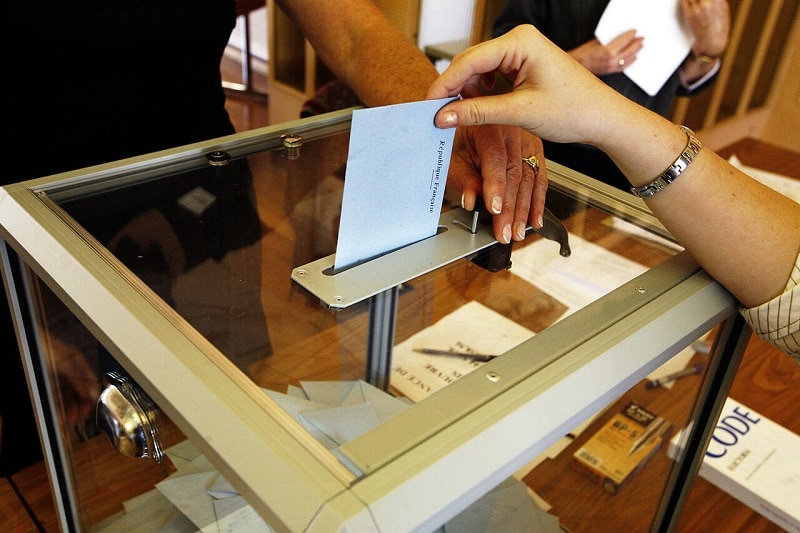
Emotional Manipulation: The Assault on the American Voter’s Minds
Emotional manipulators can have their own or someone else’s interest at heart. However, some might argue there is no truly selfless good deed: maybe they feel happy when their loved one is succeeding, or maybe they want to make up for something. Nonetheless, in politics, the purposes of manipulation are to gain power and support, to divert attention from certain issues, and/or to shed a negative light on others.
How Emotional Manipulation Works in Politics
The following practices are found both in political campaigns and ads, and outside the election season in media articles and news:
- Using negative humor or displaying negative emotions as a means of disempowering someone or a group. Trumping up.
- Blaming others of victimization.
- Victimhood, claims of persecution, exaggerating, or creating personal issues.

Persecution of Paulicians, Unknown author, 12th/13th century.
- Pestering until the other agrees or surrenders to his demands.
- Intellectual Bullying. Manipulating facts or making excuses. Taking advantage of some fields the public might know little about and imposing facts, statistics, or data – often times out of context.
- Inducing stress by giving little time to prepare for or decide something.
Ultimately, emotional manipulation targets our survival instincts and their responses. The messages are imperceptibly introduced in the consciousness of the masses to obtain the desired outcome. But victims of emotional manipulation do not feel pressure or constraint.
They do not receive direct instructions, they are lured into thinking they choose the behavior and response themselves. In fact, years can pass before the effects of manipulation and propaganda emerge.
“It is worthy of remark that a belief constantly inculcated during the early years of life, whilst the brain is impressible, appears to acquire almost the nature of an instinct; and the very essence of an instinct is that it is followed independently of reason.”
—Charles Darwin, The Descent of Man, 1871
Emotional Manipulation in Political Campaigns
In politics, emotional manipulation boils down to either bombard the public with information. In today’s landscape, voters find it difficult to access unbiased news articles. And surprisingly, straight-up facts are out there. We just need to look a little deeper, past the language manipulation, euphemisms, and synonyms.
- Demographic targeting & bond strengthening. Using tailor-made messages for different demographic groups.
- Using (seemingly-)shocking facts to evoke fear, disgust, or excitement in the target audience or to make opponents withdraw from the conversation. Compassion, hope, and awe can also be used to create this effect.
- Attacking the opposition & organizing smearing campaigns.
- Reducing the diversity of facts the ordinary citizen has access to.
A charismatic and able public speaker can also transmit a whole lot of words, sometimes facts, even when barely connecting to each other. Avoiding questions or partially answering them should not be common, but they are.
“He who wants to persuade should put his trust not in the right argument, but in the right word. The power of sound has always been greater than the power of sense.” —Joseph Conrad, Lord Jim, 1900

Emotional Manipulation in Political Ads
Ads use musical backgrounds and other sound effects, imagery, speed, color intensity, voice, and keywords to influence the viewer’s perception. All the facts transmitted through a political ad also come with an emotional baggage, if correctly done.
Nevertheless, all media channels start broadcasting them a year or more before the elections. All this information shapes the public’s perception through the internet, TV, radio, mail, billboards, etc. In the most recent years, political telemarketing has become a common practice.
Other forms of emotionally manipulating the voters include:
- Using celebrities in their political campaigns & ads.
- Using children or minority groups in their ads.
- Addressing their belonging to the target community.
- Practices like unattractive predictions, shocking imagery, etc.
- Culturally-targeting emotional stimuli.
These ultimately are forms of personal or political branding that, if correctly done, should paint a long-term portrait of a person or organization. We all remember the ads when we were little: all with the flag on the background and a guy in a suit with a fresh hairdo. Many of them are still present in this decade’s political scene. This is partly due to the political campaigns over the years.
“Power is in tearing human minds to pieces and putting them together again in new shapes of your own choosing.” – George Orwell, 1984
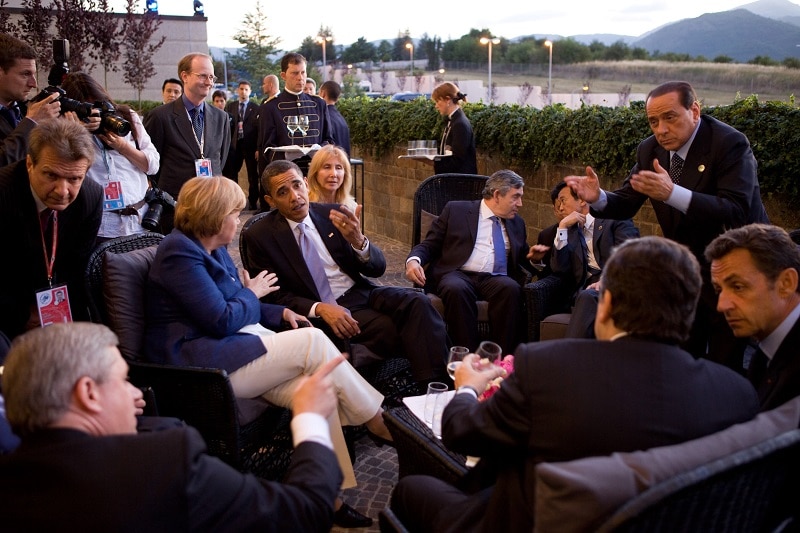
The Effects of Emotional Manipulation in Politics
As mentioned before, political campaigns have long-term effects. Therefore, latent feelings of rage, anxiety, and hate can be awoken by negative campaign ads. But so can curiosity, empathy, and motivation to make a change.
Paranoia & Anxiety
A common practice is introducing sociopolitical myths confirming or disproving certain norms, values, or other issues. They can hold down pressure, shift the public’s attention from certain events, making them estimate or understand the environment differently. This determines voters to support policies they would otherwise disprove of.
Politicians use fear to emotionally manipulate the public on abstract or difficult to understand matters. This can also include matters they previously covered up. The principle is simple: the more obscure and isolated the occurrence or study, the less likely the public is to contradict them.
Labeling
Planting stereotypes that are unfavorable of certain demographic groups in terms of gender, ethnicity, or sexual orientation. No matter what politicians might say, the outcomes of these practices, like persecution, do not favor society.
Anger & Empathy
Anger, often times induced by empathy, can be another favorable practice. For example, focusing on the cutbacks in welfare for young people without also mentioning the increased number of jobs.
“Negative campaigning works because it harnesses the enormous blind energy of envy.” – Bryant Welch, State of Confusion: Political Manipulation and the Assault on the American Mind
But Emotions Also Make Our Decisions Rational!
Yes, emotions make us human. Furthermore, it also seems they make us rational and well-informed. Even though previously seen as the uninformed way of making a choice, emotions determine us to research or decide whether a matter is wrong or right. And ultimately, all our emotional responses decide our society’s standards.
But emotional manipulation in politics is not about showing the emotional side of the matter. It’s about only displaying the events that favor a certain side.
This results, for example, in anger towards asylum-seekers who want to exploit the welfare system. But little empathy goes toward the little girl who fled the war and will be persecuted for her nationality if she survives the journey.

Refugee girl starting a new life in Cyprus, after fleeing her home town which was later destroyed.
So How to Stop Emotional Manipulation in Politics?
The main obstacles of manipulation in politics are:
- The private experience of their public.
- Unbiased media channels: eradicating corruption and political endorsement in media agencies.
- Strong state & federal organizations: eradicating corruption governmental institutions.
The last two would probably, in time, solve the first one, too. However, we shouldn’t rely on that. Feelings of anxiety or anger can make the public do further research into the matter, and even end up supporting the opposing side. We should always look for the other side of the matter. And sometimes, not rush to conclusions since it takes years, maybe even decades, for the whole truth to come out.

All in all, emotional manipulation in politics will not find its end until people will start to inform themselves better. Because in the end, it all boils down to the public’s inability to estimate some matters, misunderstanding facts, drawing biased conclusions, and being indifferent to all of these. And we need to inform ourselves specifically of each candidate’s vested interests.
