Sand Tray Therapy : A Powerful Play Therapy Technique for Kids
Sand tray therapy is one of the most powerful play therapy techniques for children. For the play therapist, it is comparable to an X-ray or MRI because it provides the unconscious symbols and their relationship. This gives the therapist the information needed to guide the therapy, not only for the child but also for the parents.
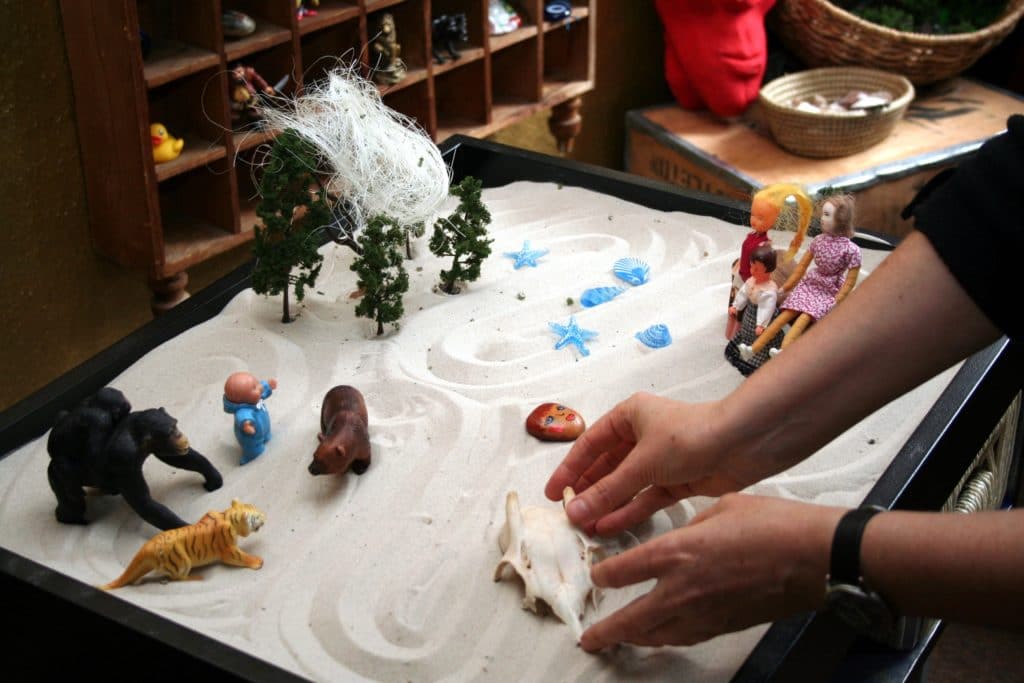 An adult has developed the ability for self reflection and abstract thinking, but a child has not. Therefore, the language of play is symbolic and needs a good therapist. The therapist can interpret the language of symbolic play and be sensitive enough to follow the child’s lead, to stay out of the way, and facilitate a natural healing. This healing can occur through the various play therapy toys and art materials that are available from the therapist. Some may want to paint or draw, play a game, some may want to play with the doll house, and some may gravitate toward sand tray toys.
For the child, play therapy and sand tray therapy are comparable to working with dreams and fantasies in adult therapy. It can provide in-depth healing when attended by an experienced psychotherapist.
Many times play therapy interventions can seam ridiculous to a parent. “You just play with my child, and that is therapy?” Yes, but in a particular way. Sometimes the parents even sit in on the sessions.
Child-centered play therapy interacts with a child’s natural inclination toward play as a means to express, learn, and mature physically and emotionally. Play is to a child as conversation might be for an adult in therapy. The therapist is able to follow and interact with a child in play, as they might follow and interact with an adult in therapy.
The child opens to the therapist through play just as an adult might open to the therapist. The difference is that a child may not talk about the problem at hand like an adult, especially young children. But, they will play it out in detail, especially in sand tray therapy.
Play therapy and sand play therapy provide the symbolic expression with which many adults have lost touch. That is why I ask most of my adult clients to record their dreams and fantasies, participate in some art form, and to begin looking at their life more symbolically. Children have not lost the symbolic process but they need the adults in their life to care for that innate gift.
Sand play therapy training provides the therapist with their own experience of the process. It is important for the therapist to be a patient with sand tray work, as it is essential for all therapists to have their own personal psychotherapy. Sand tray therapy is as much for adults as it is for children but it is more commonly used with children.
