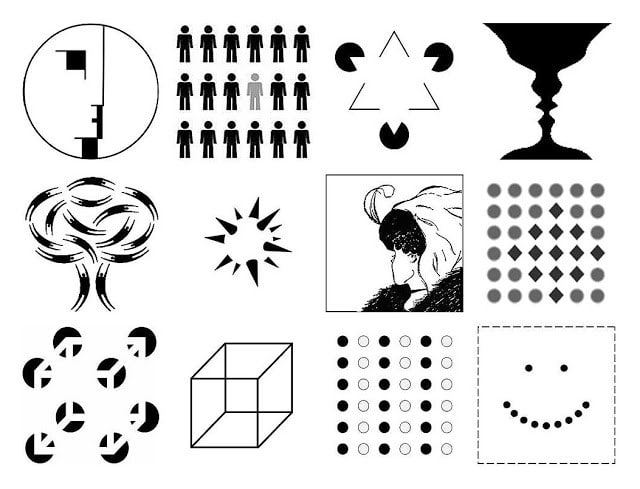
There are many schools of psychology. We hear a new spin on therapy, psychology and spirituality on a regular basis. Some of these ideas for healing body, mind and spirit are ancient, others are specific to the needs of our present cultural situation.
We find many of these psychological theorists appeared in the western world during the late nineteenth century and before WWI. It was a time when social order, religion and the present medical science was not adequately holding the individual and culture. We needed a developing study of the individual mind and how that individual was making sense or not making sense of the changes that were happening.
Now, about a hundred and fifty years later, the perspective is larger and more insightful. There are better human rights, the psychology of the individual and family is much better but we can also perceive that we are just beginning. We are just beginning a deep dive into our human existence and finding what gives us meaning. We are learning how to navigate this modern era.
This is a long introduction to Gestalt therapy which originated in the early nineteen hundreds with Max Wertheimer’s work on perception.
“In fact, the word Gestalt means a unified or meaningful whole”
“Gestalt psychology is based on the observation that we often experience things that are not a part of our simple sensations. The original observation was Wertheimer’s, when he noted that we perceive motion where there is nothing more than a rapid sequence of individual sensory events.”
http://webspace.ship.edu/cgboer/gestalt.htmlth
We are gradually perceiving the wholeness of this reality. Just as the early gestalt therapist’s perceived: “The whole is other than the sum of its parts” Koffka,
http://www.intropsych.com/ch04_senses/whole_is_other_than_the_sum_of_the_parts.html
We now understand that we all have many parts to ourselves. We have a feeling self, a rational self, an instinctual self, a dreaming self, a family self, a solitary self and so on. We are all multiple personalities so to speak, living in a world of multiple personalities. Most importantly, these inner parts are deserving of attention and empathy, as are those in our outer world.
There are very few gestalt therapists these days because the original ideas have been developed and integrated into other psychotherapy methods, attitudes and perspectives.
The empty chair technique is a gestalt therapy exercise.
You sit in a chair and have an empty chair facing you. Then you imagine someone in that chair that you would like to talk with. It could be an inner part of yourself such as, the wise person, the victim, goddess, anxious child, princess/prince, etc. Dreams provide specific characters. Or, an external person, such as, a parent, boss, husband/wife, neighbor and so on.
Then begin an imaginary discussion with this part of yourself or this person in your life who is sitting in the empty chair. Say anything that comes to mind. Say your piece or ask a question. When you feel ready to stop, move over into the empty chair.
Now be that part of yourself or that external person you chose and say their perspective back to yourself in that empty chair that you were just sitting in. Then go back into your original chair and respond to those comments just made by the other. Continue to go back and forth until you feel finished. Notice the change in your perspective after this exercise.
The purpose of this gestalt technique is encounter the various parts of ourself so we can perceive a more whole self. If I only see myself in a singular way, I will have a very narrow experience of life and have a very narrow view of others.
